Blog
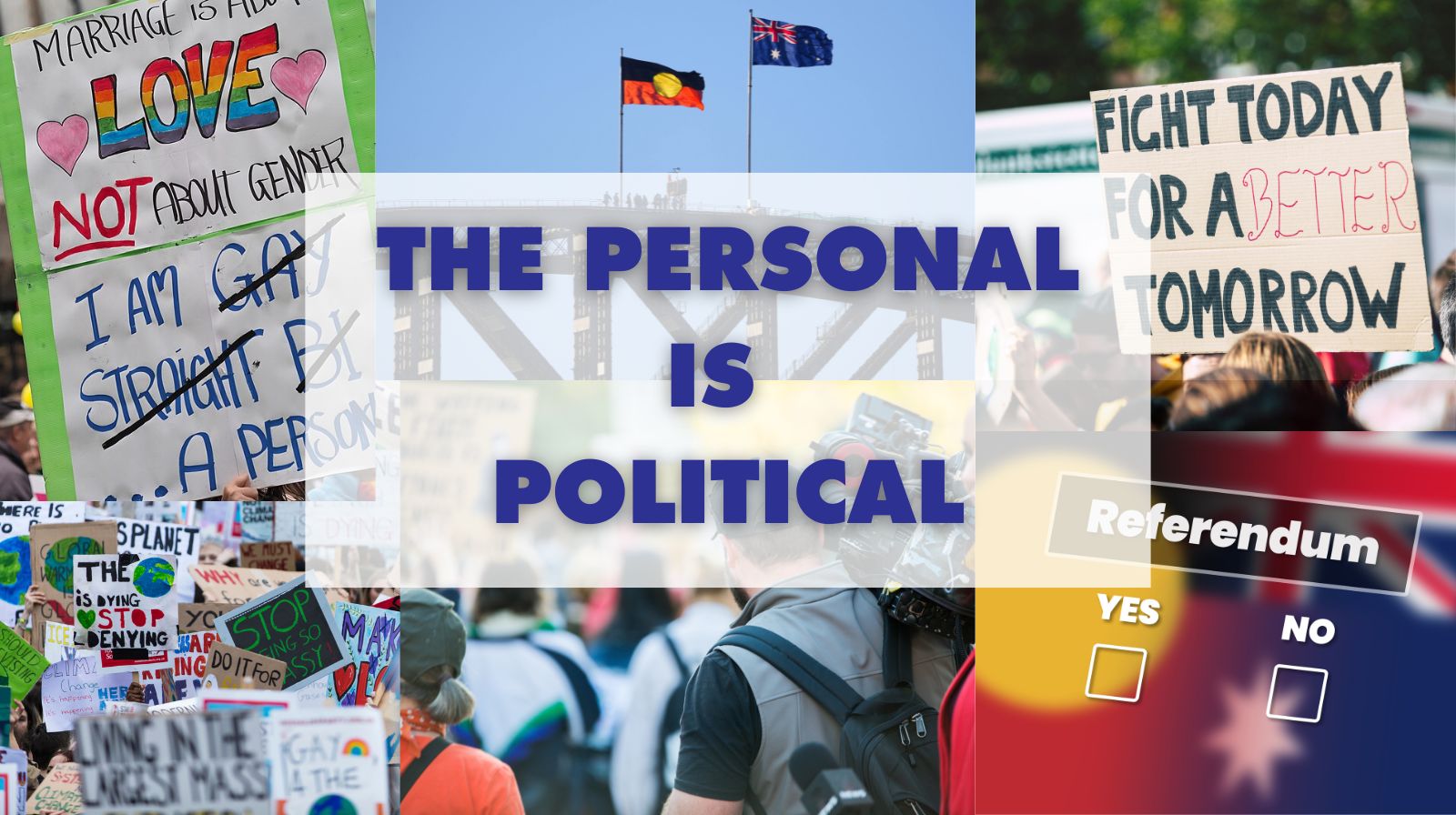
The Personal is Political
May 25, 2026

SINGLEHOOD IS POLITICAL
A child of the revolution, I went to the International Women’s Day Rally in March 1975, where they chanted, the personal is political. I chanted it too, and by the end of the march I got it. In three years, the Whitlam Government had introduced free tertiary education, equal pay, an adult minimum wage for women, the single mother’s benefit, and access to abortion. That day, chanting that slogan, I understood a person’s power is the product of a matrix we can reshape.
I became a social worker. Not the kind that navigates people through the system, but one hellbent on systemic equality, especially for women. Hellbent because I was intensely aware of my educated, straight, white, middle-class, privilege, and wanted to consolidate Whitlam’s policies that empowered women to choose when and if they had children, leave dangerous relationships, and decline unsatisfactory offers. Policies giving everyone the right to couple with a person they loved, and loved them in return. And, if they didn’t find that kind of love there would be no economic consequence, though there might be a personal consequence. After all, back then, singlehood was transitory, and long term singlehood so scarce it was relegated to the realm of psychological damage. Back then, singlehood was only personal.
Then came the era of wage stagnation. Economists call the years between 2012 and 2022, the Lost Decade. Ten years of wage growth that couldn’t keep pace with inflation. The result of restrictive enterprise bargaining frameworks that weakened worker’s bargaining power, governments capping public sector pay rises which suppressed wages across the economy, and slow productivity growth in the wake of the Global Financial Crisis. I watched the economy morph from one where an adult wage covered the cost of living, to an economy built on a dual income household.
By the arrival of the Lost Decade, what I believed would occur as a matter of course had not. I set up home without someone who I loved and who loved me in return. Around me my coupled friends were raising children, splitting the domestic chores between them—albeit unevenly—and investing in weekenders. It was amazing the debt two incomes could afford.
My envy notwithstanding, and overcoming the conviction there was something dreadfully wrong with me, I began to suspect the right to refuse unsatisfactory offers was not the right to never couple. I also suspected Whitlam’s policies were only ever intended for mothers, since a woman without a child was such a rare and half-formed thing she is politically unimaginable. And, by the middle of the Lost Decade I suspected singlehood without children had a price tag.
In the last years of the Lost Decade, Melbourne entered the most severe and enduring pandemic lockdowns in the world. I almost choked when the Victorian Premier finished off the list of lockdown rules saying, No Visitors. That was it. No visitors. No exemptions for people living alone, no family members, no friends, no nothing for a month that would leak into 43 days.
Instantly there was protest. Within two weeks I choked again. People with intimate partners living elsewhere were allowed to visit each other and stay the night. I saw the matrix shimmering and it needed to be reshaped. Even when death’s shadow threatens, life without romance in it is beyond our policymaker’s imagination.
There were no rallies, but there were online protests for single bubble buddies and they permeated the media. But the government was not for turning, and remained committed to the solitary confinement of single people for140 days.
There was no chanting, but somewhere in the lockdown silence I got it. Singlehood certainly has a price tag, but without a lover, singlehood is politically unimaginable. When I stepped into the fresh air again, my personal singlehood had became political.
.jpg)